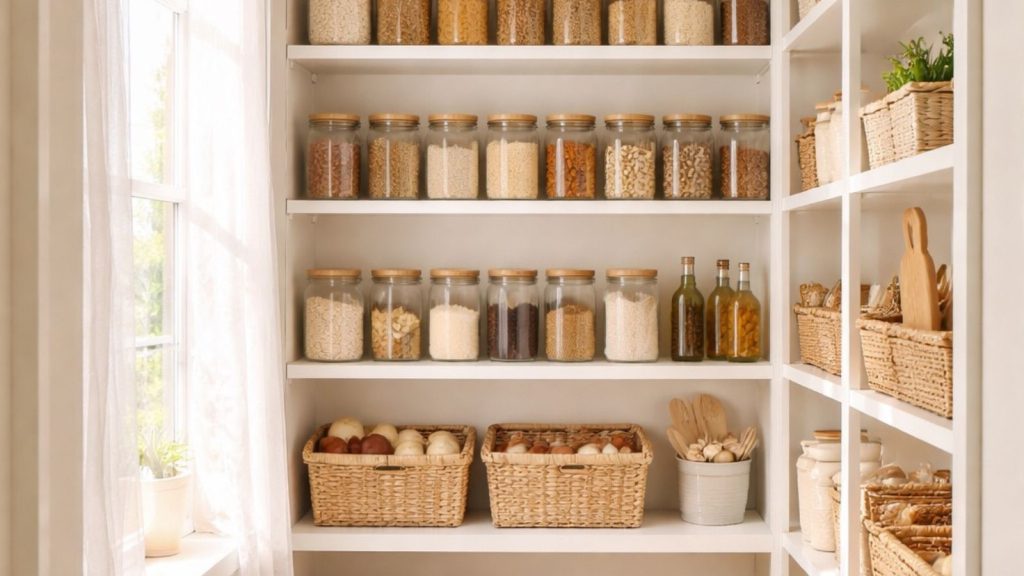
Food security is one of the most important parts of prepping. When supply chains fail, prices spike, disasters strike, or you are simply unable to leave your home for a period of time. Your food storage plan determines whether you’re calm and self-sufficient or scrambling and panic-buying.
This guide covers everything you need to know:
- How much food to store.
- Which foods to focus on.
- Long-term food storage methods.
- Rotation systems.
- Budget-friendly stockpiling.
- Emergency meal planning.
- Food preservation techniques.
Whether you’re preparing a 72-hour kit or a year’s supply, this guide will help you build a strong, lasting food plan for a crisis.
Why Food Storage Matters
Modern grocery stores typically only have a few days worth of food. Events such as winter storms, pandemics, economic instability, and supply chain disruptions can quickly empty shelves and cause mass panic buying.
Being prepared isn’t about worrying; it’s about having peace of mind and knowing you are in control.
A well-planned food supply provides:
- Security during emergencies.
- Protection against inflation.
- Reduced dependence on fragile systems.
How Much Food Should You Store?
1. 72-Hour Emergency Supply
Minimum recommended for every household. Designed for short-term disasters that only last a couple of days.
2. Two-Week Supply
Ideal for weather events, temporary job loss, or regional disruptions.
3. 3-Month Supply
Excellent buffer against economic or supply instability.
4. 6–12 Month Supply
Serious preparedness level. Protects against long-term disruptions.
If you’re just getting started with preparedness, building a short-term food reserve is one of the most practical steps you can take. Our guide on How to Build a 30-Day Emergency Food Supply in the UK walks you through choosing long-lasting foods, planning realistic portions, and stocking items that are easy to store and use during power outages or disruptions. It’s a straightforward starting point for turning general food storage advice into a simple, organised 30-day supply that works for UK households.
Calorie Planning Basics
The average adult requires approximately:
- 2,000–2,500 calories per day.
- More for physically demanding situations.
For a 3-month supply, one adult needs roughly:
180,000–225,000 calories.
Multiply that by the number of people in your household to find your total.
The Best Foods for Long-Term Storage
Since not all foods keep well, focus on calorie-packed, shelf-stable, and versatile choices.
Core Staples (The Foundation)
These form the backbone of most prepper food systems:
- White rice
- Dried beans
- Lentils
- Rolled oats
- Pasta
- Wheat berries
- Corn
- Sugar
- Salt
- Cooking oils
White rice and dry beans can last 25+ years when properly stored.
Canned Goods (Short to Mid-Term)
Canned foods provide convenience and variety:
- Vegetables
- Fruits
- Soups
- Chili
- Tuna
- Chicken
- Spam
- Tomato products
These foods have a shelf life of 2–5 years, depending on the product and storage conditions.
Comfort Foods (Morale Matters)
In stressful situations, morale foods are critical:
- Coffee
- Tea
- Chocolate
- Hard candy
- Spices
- Baking mixes
It may seem silly, but having your favourite comfort foods can really boost your morale and help you stay strong during difficult times.
Long-Term Food Storage Methods
Proper storage dramatically increases shelf life.
Mylar Bags & Oxygen Absorbers
Best for:
- Rice
- Beans
- Flour
- Oats
- Pasta
Store sealed Mylar bags inside food-grade buckets to protect against rodents and moisture.
Shelf life: 10–30 years.
Vacuum Sealing
Good for:
- Pasta
- Dehydrated foods
- Short-to-mid term storage
Not ideal alone for multi-decade storage.
Canning (Home Preservation)
Pressure canning allows safe storage of:
- Meats
- Soups
- Stews
- Vegetables
Water bath canning works for:
- Fruits
- Jams
- Pickles
Always follow safety guidelines from trusted sources.
Root Cellaring
Traditional storage method for:
- Potatoes
- Carrots
- Onions
- Squash
- Apples
Keeping these foods in cool, dark, and humid places helps them stay fresh for months.
Food Rotation: The FIFO Method
FIFO = First In, First Out.
How it works:
- Place new purchases in the back.
- Use older items first.
- Track expiration dates.
- Keep a food inventory list or spreadsheet.
This prevents waste and ensures freshness.
Budget-Friendly Food Storage Strategy
You don’t need to spend a lot of money all at once to be prepared.
Step 1: Buy Extra on Each Shopping Trip
Add one or two shelf-stable items weekly.
Step 2: Choose affordable, calorie-rich foods
- Rice
- Beans
- Oats
- Pasta
- Potatoes
Step 3: Build a Deep Pantry
Store foods your family already eats.
Step 4: Look for Sales and buy in bulk
Warehouse stores and local co-ops can dramatically reduce costs.
Emergency Cooking Without Power
Your food plan must include preparation methods.
Options include:
- Propane camp stove
- Rocket stove
- Solar oven
- Charcoal grill
- Wood stove
Always use stoves and grills safely, outdoors or in well-ventilated areas.
Water: The Critical Companion to Food Storage
Food storage is useless without enough water.
Minimum recommendation:
- 1 gallon per person per day.
- Store for at least 3–7 days.
- More for long-term preparedness.
Include water filtration and purification backups.
Nutritional Balance in Long-Term Storage
Don’t just stock up on calories; make sure your food is well-nourished too.
Include:
- Protein (beans, canned meat, lentils).
- Fats (oil, peanut butter, ghee).
- Carbohydrates (rice, pasta, grains).
- Vitamins (multivitamins, freeze-dried vegetables).
Malnutrition can become a serious problem during long-term emergencies; making sure you have the right foods is very important.
Growing & Producing Your Own Food
Food storage is step one. Production is long-term resilience.
Consider learning:
- Vegetable gardening
- Seed saving
- Sprouting
- Raising chickens
- Fishing
The more you learn about growing food, the less you’ll have to depend on stored supplies.
Common Food Storage Mistakes
- Storing food you don’t eat.
- Ignoring water storage.
- Forgetting cooking methods.
- Poor temperature control.
- Not rotating stock.
- Overlooking nutrition.
Steering clear of these mistakes will make your food storage safer and more sustainable.
Creating Your Food Storage Plan
Start with these simple steps:
- Set a preparedness goal (2 weeks, 3 months, 1 year).
- Calculate the calories you will need.
- Build a deep pantry.
- Add long-term staples.
- Implement storage methods.
- Create a rotation system.
- Develop cooking backups.
Preparedness is a process that builds over time, not a one-time purchase.
Final Thoughts: Food Security Is Freedom
Having a solid food supply helps you feel less afraid, more independent, and makes your family stronger. You don’t have to panic or spend a lot. Just start small, keep at it, and build up over time.